Close the entry route after accounting for the animal
A gap beside a roof return, a loose vent, or a damaged soffit can connect the outdoors with a sheltered attic. Trapping an animal without addressing that route leaves the building accessible. Patching it while animals remain inside creates a different problem. Exclusion is the planned sequence that brings animal removal and building repairs together.
At a home in Jupiter or Palm Beach Gardens, the inspection should follow the actual route to the structure. Mature landscaping can be relevant, but nearby habitat does not identify the animal in your attic. Frenchman’s Forest, for example, illustrates the variety of natural habitats within Palm Beach Gardens; an individual home still needs its own evidence-based inspection.
First establish what is using the opening
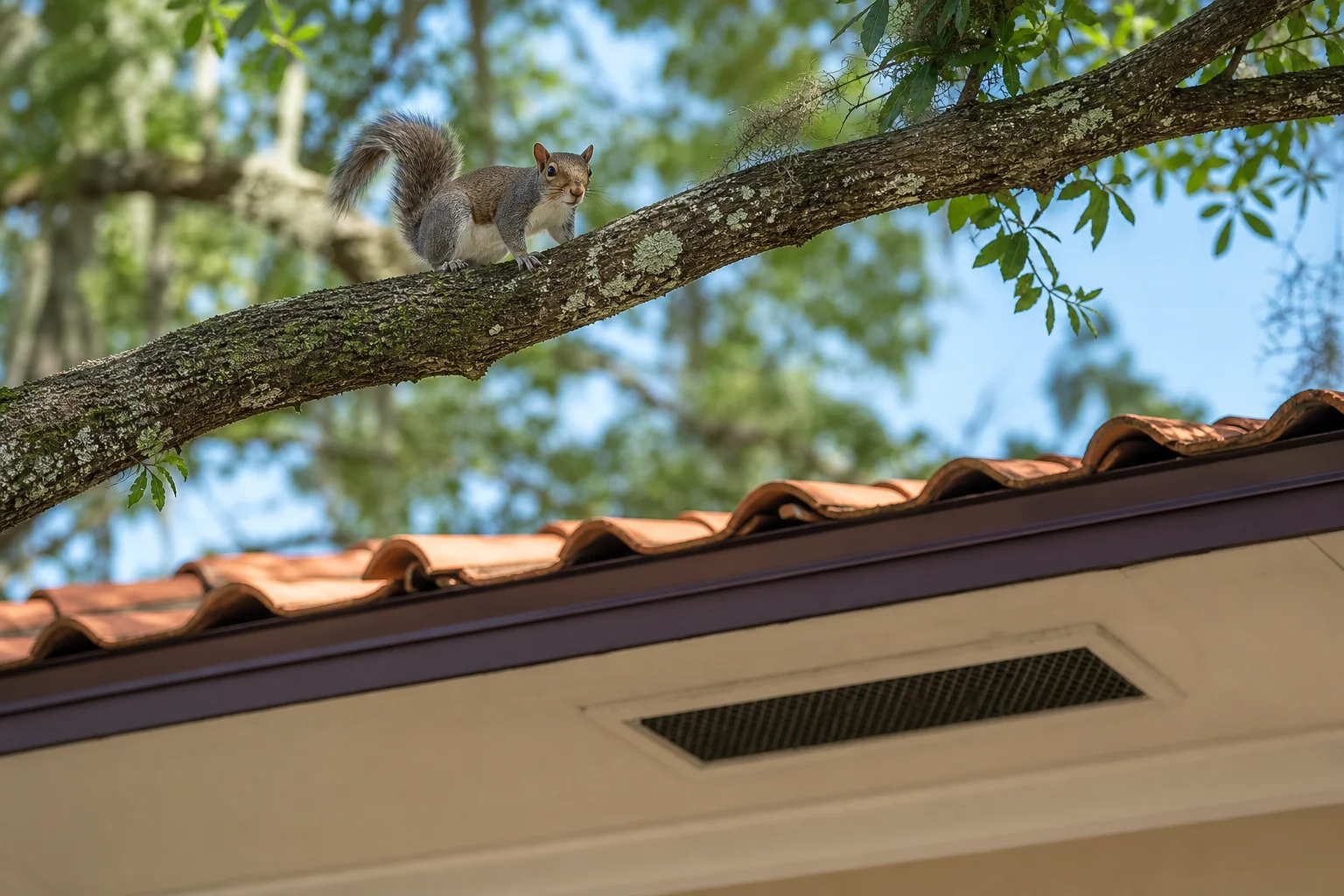
Different animals use buildings differently. Rat activity may involve several small routes and food sources, while a torn roof edge may require assessment for raccoons. Squirrels can occupy roof or wall cavities. Bats require a distinct exclusion process and seasonal planning. A noise recording or a single dropping is not a complete diagnosis.
The assessment should look for current entry, older damage, secondary openings, and signs of nesting. Where young animals may be present, the plan must account for them before access is permanently closed. Tell the inspector about past repairs or trapping, especially if activity changed afterward. That history can explain why an animal is appearing in a different part of the house.
How an exclusion plan comes together
Inspect the accessible building envelope
Roof edges, soffits, fascia, vents, wall penetrations, and changes in roof height all deserve attention. The relevant details depend on the building. An opening that appears minor from the ground may lead to a larger cavity behind trim. Areas that cannot be safely inspected should be identified so the scope does not imply that every concealed space has already been checked.
Plan the exit or removal
A suitable one-way exclusion device allows an animal to leave the building and prevents it from coming back through that opening. It is not designed to admit an animal and imprison it inside. Whether a device is appropriate depends on the species, the structure, and whether dependent young are present. Trapping, when appropriate, is a separate method with its own handling and disposition requirements.
Other vulnerable gaps may be secured as part of the planned sequence while the designated exit remains functional. Do not copy that sequence without a species assessment: the wrong closure can strand animals or redirect them into occupied rooms. FWC also sets requirements for relocating wildlife; release in a convenient park is not an automatic next step.
Verify the result and complete the repair
Permanent closure follows the appropriate removal or exclusion checks. A finished opening should be secure, compatible with the surrounding materials, and reviewable during future maintenance. Ask which repairs are included, how inaccessible areas will be handled, and what observations should prompt a follow-up call.
Roof details need different repairs
Soffits, fascia, and roof returns
A protective covering needs sound material to attach to. If trim or backing has deteriorated, covering the visible gap alone may leave a weak repair. The inspection should distinguish animal damage from an underlying water or maintenance issue. Where the repair reaches beyond the wildlife scope, clarify the work needed from the appropriate building specialist.
Attic vents and roof ventilation
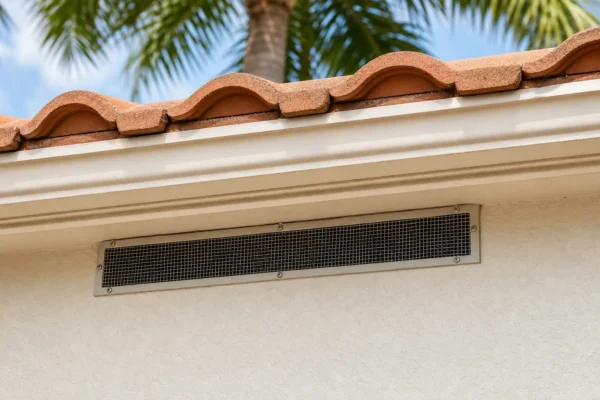
A vent must continue to ventilate after exclusion work. The appropriate guard or repair depends on the vent’s design and the animal involved. Packing an air opening with foam or covering the whole vent with a solid plate can defeat its function. Ridge and gable details also need attention to their attachment and surrounding roof materials.
Dryer exhausts and other mechanical openings
A dryer exhaust is not an attic vent. Do not place ordinary mesh over its outlet: lint can accumulate and obstruct exhaust flow. U.S. Fire Administration guidance emphasizes keeping dryer exhaust paths clear. Use an appropriate termination selected for the appliance and applicable requirements, with a qualified specialist addressing damaged or obstructed ductwork.
Likewise, do not cap plumbing vents, combustion exhausts, or unfamiliar pipes as a wildlife shortcut. Identify what the opening serves first. Protecting a building requires keeping those systems operational as well as limiting animal access.
Bat exclusion has a separate timetable
For ordinary Florida bat exclusion, the permitted window is August 15 through April 15. FWC requires exclusion devices to remain in place for at least four nights with forecast overnight temperatures of at least 50°F. The maternity restriction and any exception process must be checked before work begins. See FWC’s current requirements and our Palm Beaches bat removal service.
A roof repair deadline is a reason to arrange that assessment early. It is not a reason to seal a roost immediately or disturb animals until they leave. Tell any roofer or exterior contractor about suspected bats before the affected area is opened.
Ground-level access deserves a separate look
A roof inspection is only part of exclusion. Depending on the evidence, the assessment may also include garage-door edges, exterior utility penetrations, and openings around attached additions. A gap around a cable or pipe can lead into a wall even when there is no obvious hole in the roof. Describe activity in garages and lower rooms as well as sounds overhead.
Seal the space around a penetration with an appropriate repair while preserving the pipe or cable’s function. Do not close drainage openings or assume that every small exterior gap is a defect. Some building details are intentionally open. Where their purpose is uncertain, clarify the construction before changing it.
Materials must suit the animal and the building
A lasting closure depends on more than placing a barrier over a hole. The material, attachment, edges, and surrounding condition all matter. An otherwise sturdy panel can leave access at one loose corner. A neat-looking filler may conceal an opening without giving the repair the strength the animal problem requires.
The proposal should explain which openings receive a fitted cover, a vent-specific guard, replacement trim, or another repair. Ask how the installer will protect the adjacent roof surface and preserve access to equipment. Where finishing is important, discuss the visible appearance before installation rather than assuming that every repair will blend into the original exterior.
Plan exclusion around other building work
If a roofer, painter, electrician, or HVAC contractor is scheduled to work at the same property, share that information early. Removing a section of trim or installing a new service line can change an exclusion plan. Similarly, a wildlife repair should not cover a component another contractor needs to replace the following week.
For a condominium or other property with shared exterior areas, establish who can authorize roof access and repairs. The animal may be heard inside one unit while entering through a shared building component. Coordinating access lets the inspection follow the likely route instead of stopping at the room where the sound is most noticeable.
What to watch for while work is in progress
Give the technician updates on fresh activity, particularly a change in where or when you hear movement. Observe from a safe position and keep people and pets away from animals and any installed equipment. Leave devices and temporary closures as arranged; moving them can change the removal sequence or make the observations harder to interpret.
After completion, ask which areas were repaired and which were inaccessible. Keep the written scope and photographs with your property records. If new evidence appears, report its location and timing so the follow-up can compare it with the original findings. A new opening, continuing activity, and harmless outdoor wildlife are different situations that deserve different responses. The final handoff should explain who to contact and what information to provide.
Support the repair with everyday prevention
After the structural work, review vegetation touching the building, accessible pet food, unsecured waste, and places where debris hides the exterior. UF/IFAS landscaping guidance provides useful context for reducing access from plantings. Keeping entry areas visible also makes it easier to notice a displaced cover or a new gap after later maintenance.
Exclusion does not remove soiled insulation or repair every consequence of occupancy. If the inspection finds affected attic materials, discuss attic restoration as a distinct part of the proposal. Homeowners in Lake Worth Beach and the surrounding Palm Beaches can call 561-462-0335 to arrange an assessment of the animal activity and the openings that need attention.