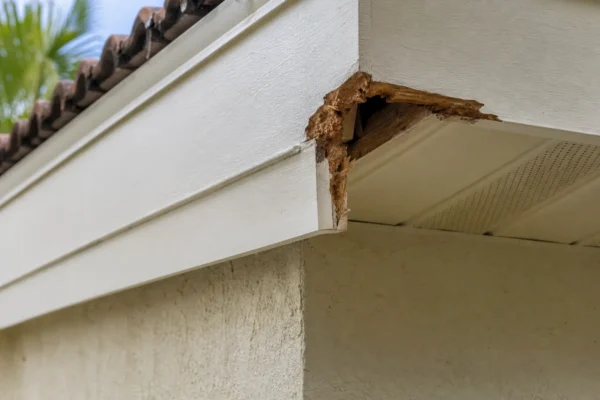
Repair the damage and understand why it happened
A broken soffit or lifted section of trim is worth investigating even when the animal is no longer visible. The opening may still lead into a roof cavity, and the surrounding material may have weaknesses that a simple surface patch will not address. The first step is to connect the damage with the animal activity and the condition of the building.
At homes in North Palm Beach, Riviera Beach, and nearby communities, that means inspecting the individual roof and exterior details. A property’s location does not establish the cause of a defect. Animals may enlarge an existing weakness, while loose material or a water problem may require attention in its own right.
Separate urgent concerns from the remaining scope
Tell the inspector if the opening is exposed to rain, if a ceiling is sagging, or if you have noticed damaged wiring or an unusual electrical smell. Keep clear of unstable or electrical areas and arrange the appropriate specialist assessment. Avoid climbing onto a roof or entering an attic to measure damage yourself.
The proposal should distinguish animal removal, temporary protection where appropriate, permanent entry repairs, and cleanup. Some work can be completed together; other parts depend on confirming that animals have left or on a separate building repair. Defining that sequence helps avoid reopening finished work later.
Animal entry and building damage are connected
Raccoon removal may be part of a plan for a damaged roof edge. Squirrel activity or rats may require inspection of smaller openings and nearby routes. Bats can occupy existing gaps, so their presence does not mean they chewed the opening. Identification should follow evidence rather than an assumption based on the size of the hole.
Before closing an occupied opening, account for animals and dependent young. Wildlife exclusion provides the removal-and-closure sequence; damage repair addresses the affected building materials. When bats or nesting birds may be involved, species protections and timing can change that sequence.
Soffit and fascia repairs
Soffits form the underside of an overhanging roof edge; fascia is the trim at its outer edge. Damage in either area can expose the space behind it. A repair needs secure attachment to sound material, not just a cover stretched across a visible opening. The surrounding panels and transitions also need review so a gap is not left alongside the patch.
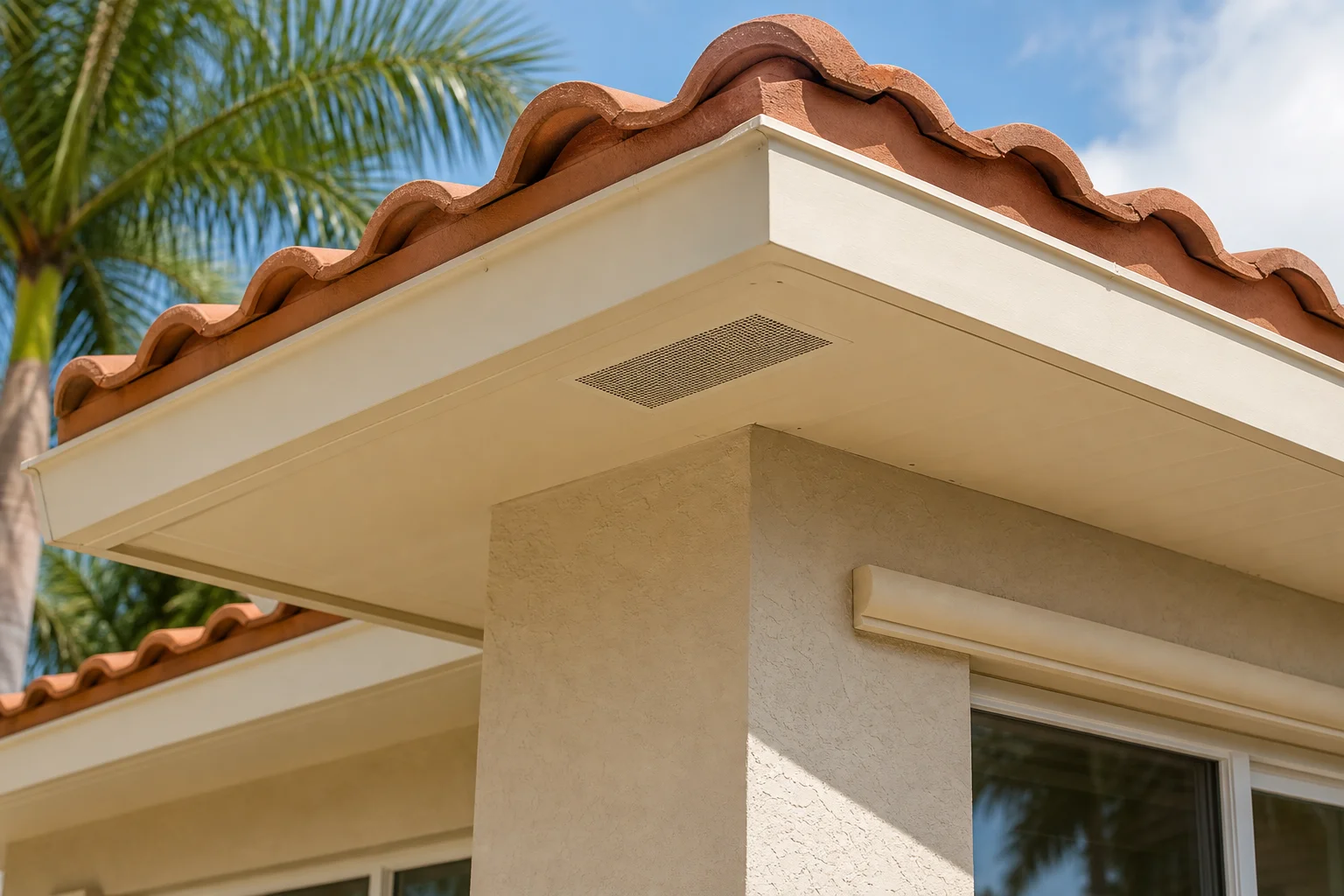
Ventilated soffit sections must retain their intended airflow. Where backing has deteriorated, replacing that material may be necessary before an animal-resistant closure can be installed. The scope should clarify whether finishing and color matching are included and whether a separate contractor must address the underlying deterioration.
Roof edges, flashing, and siding
Animal entry often draws attention to a joint between building components: a roof return, a wall connection, or an opening beside trim. Repairs at these transitions need to respect how the roof sheds water. A cover that blocks wildlife but directs rain behind the exterior is not a complete solution.
Ask which portions fall within the wildlife repair proposal and which require a roofing or exterior specialist. Damaged shingles, underlayment, sheathing, or complex flashing may involve a different scope from protecting an entry gap. Identify those responsibilities before the work begins, especially if another contractor has recently worked in the same area.
Vents, chimneys, and utility openings
An attic vent, chimney, dryer exhaust, and plumbing vent have different jobs. Protection must suit the opening and preserve its safe function. A properly selected attic-vent guard is not a universal cover for every pipe and exhaust on the building. Do not stuff openings with insulation or seal unfamiliar outlets.
Dryer exhausts must remain unobstructed. Ordinary mesh can collect lint at the termination, and U.S. Fire Administration guidance calls for clear dryer exhaust paths. Damaged exhaust components need an appropriate repair or replacement selected for the appliance. Chimney work likewise requires compatible components and an assessment of the flue’s condition and operation.
If an animal is suspected in a chimney, leave the fireplace unused until the situation is assessed. A cap should follow confirmation that the space is clear and any needed chimney work is complete. Smoke, heat, or an immediate permanent cap are not appropriate ways to force an animal out.
Insulation, wiring, and ductwork
An exterior repair may reveal damage inside the attic. Disturbed or soiled insulation belongs in an attic restoration assessment. Damaged electrical components require an electrician, while torn or affected HVAC ducts need an appropriate mechanical assessment. Photographs can document visible findings, but concealed parts may need additional inspection.
Do not assume that an odor proves every duct needs cleaning or that a whole-home treatment is necessary. EPA guidance recommends considering the evidence and the system’s condition. A specific description of the affected component is more useful than a general promise to restore air quality.
Cleanup is a separate part of recovery
Repairing the entry point does not remove waste or nesting debris. Avoid disturbing rodent droppings with dry sweeping or vacuuming; follow CDC’s cleanup precautions and arrange a suitable cleanup assessment. The amount, location, and type of affected material determine what that work involves.
When comparing proposals, check whether material removal, disposal, insulation replacement, and odor-source investigation are included. Treating a smell alone can leave its source in place. Broad claims that every health risk has been eliminated are not a substitute for a defined cleanup scope.
Agree on the repair boundaries
Before authorizing the work, review the specific openings and components included. Confirm who handles any separate trade work and how newly discovered damage will be discussed. If an area cannot be seen until material is removed, the proposal should identify that uncertainty. This gives you a practical basis for deciding on additional work if the inspection reveals a larger problem.
After the repair
Keep a record of repaired openings and the other work recommended. Check those areas from a safe position during routine property maintenance and after another contractor alters the roof or utilities. Report renewed sounds, fresh debris, or displaced covers rather than assuming the original animal has returned.
Vegetation management can support the repair where branches or dense plantings provide access or conceal defects. UF/IFAS guidance on landscaping and pest prevention explains that connection. Homeowners in Atlantis and the Palm Beaches service area can call 561-462-0335 to discuss damage and arrange an inspection. The next step should be a repair scope grounded in what the building actually needs.