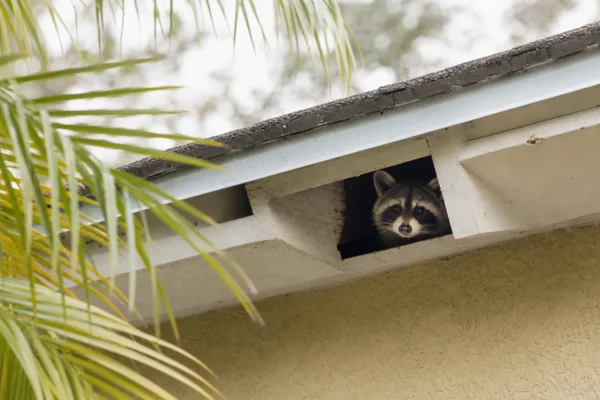
Start with a pattern, not one noise
A short burst of scratching does not establish that a raccoon lives overhead. Rats, squirrels, branches and building components can also produce sounds near a ceiling. Repeated movement in the same area, combined with a visible entry route, gives an inspector a more useful starting point than the loudness of a single thump.
Keep a simple record of the time, the room below the sound and whether it moves across the ceiling or stays near an exterior wall. Recordings made from your living space may help. There is no need to enter a dark attic or follow an animal onto the roof.
Clues that deserve a closer inspection
Movement and vocal sounds
Heavy movement or repeated chattering can justify an inspection, especially if you also see an animal using the roofline. However, neither the sound nor its timing confirms the species. The FWC raccoon profile explains that their activity can vary with food availability. Daytime activity alone is not evidence of illness.
A route through the exterior
From the ground, look for a displaced soffit panel, damaged vent cover or opening at a roof intersection. A photo taken from a safe distance can document a change. The companion guide to how raccoons enter attics explains which building details an inspection should cover.
Disturbance inside the attic
Flattened insulation, staining or an unusual odor can support the investigation, but each has other possible causes. A concentrated waste area needs particular care: FWC identifies raccoon feces as a potential source of roundworm exposure. Keep people and pets away, and do not handle material to identify it.
What the inspection needs to establish
The useful outcome is a confirmed animal, an active access point and an assessment for dependent young. High-pitched calls may prompt a closer check for a raccoon den in the attic; silence does not rule one out. Do not cover a suspected entrance while animals could remain inside.
For raccoon removal in Jupiter or an inspection in Palm Beach Gardens, share your observations when arranging service. Branches near the roof are worth noting, but they do not prove occupancy. AAAC Wildlife Removal can discuss Palm Beaches raccoon removal and the next steps for your property at 561-462-0335.