What counts as evidence of a raccoon problem?
A raccoon on a fence and a raccoon repeatedly entering an attic present different problems. The first observation may call for securing food sources. The second requires a plan for an occupied structure. Before choosing a response, establish what is happening, where it happens and how often it repeats.
In West Palm Beach, natural places such as Winding Waters sit within the wider urban landscape. At home, the inspection can follow a practical route from the garbage-storage area and fence line to the roof edge. Record where signs repeat, which materials are damaged and whether an opening appears to be in use.
Check several kinds of clues
Repeated structural entry
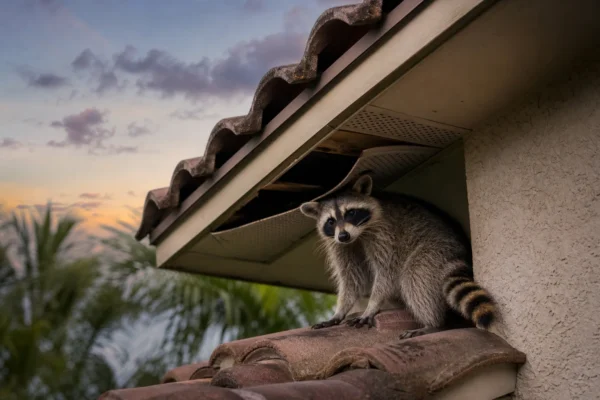
A clear view or recording of a raccoon moving through a roof or soffit opening is particularly useful. Note the exact location and time from a safe position. A damaged panel alone cannot confirm the species, and a hole may have existed before the current activity began.
Sounds that follow a route
Footsteps, scratching and vocal sounds can narrow the search area, but sound travels through building cavities. A noise over one bedroom may originate closer to the roof edge. Record patterns without opening walls or entering the attic to investigate. The attic signs guide explains how to combine sounds with exterior observations.
Disturbed material, staining or odor
Flattened insulation and waste require attention when found during a safe inspection. They do not automatically establish how many animals are present or whether activity is current. Water intrusion, other wildlife and older damage can complicate the picture. Avoid touching droppings or moving contaminated material while trying to identify it.
Food scattered outside
Opened trash and missing pet food suggest an accessible meal, not necessarily an indoor den. Secure the food and monitor what changes. Our guide to raccoons in the yard describes that outdoor response. Keeping a pet indoors also avoids an unnecessary confrontation while you assess the situation.
Do not read too much into one observation
A branch touching a roof is an access opportunity, not proof of an infestation. A barking dog does not identify what it heard. Likewise, the FWC raccoon profile notes that activity changes with food availability; seeing a raccoon in daylight does not diagnose rabies.
If an animal seems disoriented, injured or unable to move normally, keep away and seek qualified assistance. Do not test its response by approaching it. A bite or scratch needs prompt medical advice, independent of any building inspection.
Turn the observations into a practical plan
An inspection should identify the animal, distinguish old damage from active use, locate access points and check for dependent young. Removal and repairs can then be planned in the right order. Avoid blocking an opening before that assessment is complete, even when the attic has been quiet for a few hours.
AAAC Wildlife Removal can discuss raccoon inspections in West Palm Beach and raccoon removal in Riviera Beach. Call 561-462-0335 with the locations and times you recorded, or read the Palm Beaches raccoon removal overview before arranging the next step.