Separate an active problem from prevention work
If you hear movement above a ceiling or see a raccoon entering a gap, start with an inspection. Prevention repairs come after determining which animals are present and whether young depend on an adult for care. Permanently blocking an occupied opening can strand animals and turn a straightforward repair into a more difficult removal.
For a home with no evidence of current occupancy, a planned exterior review is still useful. Photograph questionable areas from the ground and arrange safe access for anything high, concealed or difficult to inspect. The goal is to correct specific defects, not simply cover every vent with whatever material is available.
Build a repair list around the whole exterior
The opening used during one incident may not be the only vulnerable point. A prevention plan should consider adjacent roof sections and other sheltered cavities. Our guide to raccoon entry into attics explains the relationship between soffits, roof edges and access routes.
- Repair loose or damaged soffit panels and the material supporting them.
- Check vent covers and their attachment points while preserving required airflow.
- Have deteriorated roof edges, flashing and water damage evaluated by the appropriate building professional.
- Assess chimney protection with safe fireplace and flue operation in mind.
- Review sheds and other enclosed spaces before closing gaps around them.
A patch needs a sound surface to attach to. Covering rotten wood or leaving a loose edge may preserve the original weakness. Roofing, ventilation and wildlife exclusion work should fit together so that solving an animal problem does not introduce a moisture or building-safety problem.
Make the yard less rewarding
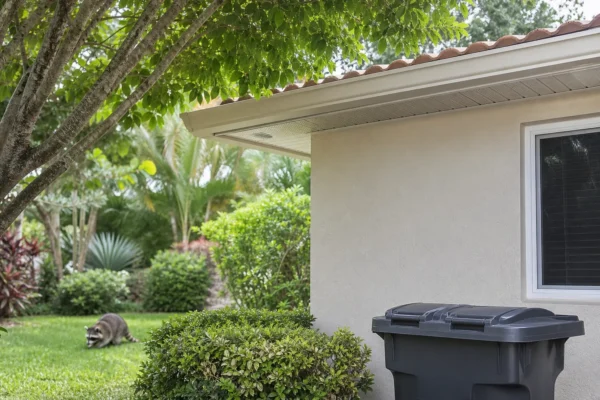
Food management supports building repairs. Keep trash lids secure, remove accessible pet food and deal with fallen fruit or birdseed. FWC’s wildlife conflict guidance emphasizes reducing attractants. Avoid feeding a raccoon in another part of the yard as a way to draw it away from the house.
Review branches and vegetation touching the building with a qualified tree-care provider where needed. Removing an easy route can help, but it does not substitute for repairing an opening. A raccoon may have more than one way to reach a roof.
Include cleanup and follow-up
Once the space is unoccupied, document damaged insulation and areas affected by waste before deciding what needs removal or replacement. A potential roundworm hazard in raccoon feces is a reason to arrange appropriate cleanup, not to assume that every attic surface is contaminated. Deodorizing alone does not remove waste or damaged material.
Keep the repair record and recheck accessible exterior areas after roof work or visible weather damage. New sounds, loosened covers or a reopened gap deserve attention even if the earlier work appeared successful. The infestation signs guide helps organize those observations.
For raccoon prevention in the Lake Worth area or raccoon service in Atlantis, discuss your property with AAAC Wildlife Removal at 561-462-0335. Start with the Palm Beaches raccoon removal overview if the building may still be occupied.